

If you’ve found value in doing resets and sticking to routines —or you’re trying too— then you’ll wanna check out this simple end of month reset checklist that makes starting a new month so much easier!
There is always that one day each month when you suddenly realize that the month is basically over and you’re not keen on carrying all that unfinished mental cutter into another month.
And you really don’t have too.
If you just spend an hour or two doing this simple end of month reset routine, you’ll basically be setting yourself up to feel more organized, less overwhelmed, and much more prepared for whatever comes next in the new month!
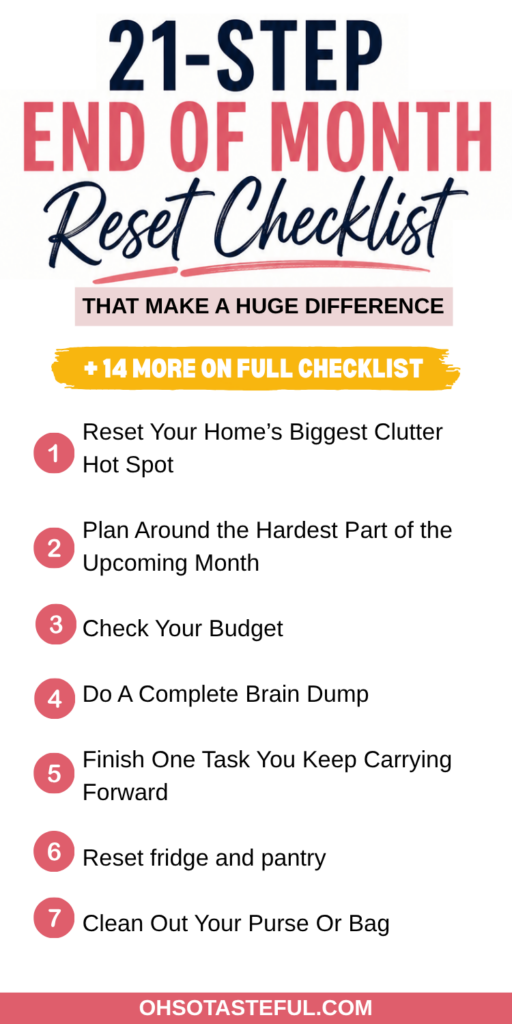
And, by the time you’re finished with this, your home will feel calmer, your mind will feel clearer, and you’ll already know exactly what you’re walking into next month … or at least be as ready as anyone can be when life likes to throw the occasional curve ball.
What Is An End Of Month Reset?
An end of month reset is a routine you complete during the last day or two of every month instead of letting one month blend into the next. It’s a time when you intentionally take a pause to do:
- reset your home
- reset your finances
- reset your schedule
- reset your habits
- reset your mindset
This helps to give you somewhat of a clean slate so the new month starts with less chaos and more structure.
Also, not everyone will be able to complete every thing on this checklist. After all, there are 21 end of month reset ideas here. But, even if you’re able to do half of the list, you’ll be much better prepared for the new month. So try to do what you can if you have less time.
End Of Month Reset Checklist
1. Empty Every Trash Can
This is pretty simple, but not everyone remembers to do this. And, it’s an easy way to make your home feel fresher with just a few minutes of work.
To do this, walk through every room and clean out the trash. Also, don’t forget to replace every liner while you’re at it.
2. Clear Your Kitchen Completely
There is something about kitchens that makes them collect the most clutter and seem the dirtiest even if you just cleaned. So, for your end of month reset, focus on cleaning the sink, wiping down appliances, clearing counter tops, throwing out expired leftovers, disinfecting handles and finish by sweeping and mopping.
A clean kitchen removes one more excuse for ordering takeout or putting off cooking. When your counters are clear and your sink isn’t full of dishes, preparing meals simply feels easier.
3. Do A Refrigerator Reset

If food keeps getting lost in the back of your fridge, these organizer bins can help. They make it easier to group snacks, produce, leftovers, drinks, and meal prep ingredients so you can actually see what you have. Less forgotten food. Less waste. Less standing in front of the fridge wondering what’s in there. And honestly, they make weekly fridge resets so much easier.
A fridge reset is a must at the end of each month. It helps you make grocery shopping easier and it makes it harder for you to waste food (i.e money).
So, spend a few minutes taking everything out the fridge, then throw away anything expired, wipe down the shelves, group similar foods together and take stock of what you have and what you’re missing.
Then, go ahead and start making a quick grocery list. Right now you do not need to make the list based on what you’re cooking for the coming week or the next few days. This list is just based on the basics you’ve run out of and need to replenish.
4. Check Your Pantry
Next, go through your pantry and check for expired spices, empty items, etc. and write down anything you need to get at your next grocery trip.
5. Finish The Laundry

A reusable alternative to dryer sheets and liquid fabric softener that helps reduce wrinkles, soften clothes naturally, and shorten drying time. This pack includes four wool dryer balls that can be reused for hundreds of loads.
Another thing you can do before the month is over is to finish the laundry. Instead of leaving things for later, make sure all your laundry is clean, all clothes are folded and put away and the dryer is emptied out.
6. Reset Your Home’s Biggest Clutter Hot Spot
There’s no need to de-clutter your whole house in an end of month reset. However, de cluttering just one hot spot that constantly catches your eye every time you walk past it can make a huge difference.
After all, starting a new month with that one problem area reset can make your entire home feel calmer, even if the rest of the house isn’t spotless.
7. Refresh Your Bedroom

There’s something about a clean room that makes a new month feel like you’re starting on the right foot. So, go ahead and wash your bedding, dust your nightstand, clear out clutter, air out the room etc.
8. Clean Out Your Purse Or Bag
At the end of every month, clean out your purse or bag to get rid or organize things like receipts, trash, random stationary, loose coins, old shopping lists, expired coupons, tangled charging cables, makeup products, and any other random item that found its way into your bag.
This takes less than 5 minutes but relives quite a bit of stress!
9. Create A Simple Meal Plan (+Grocery List)

At this point, you’ve gone through your refrigerator and you’ve also gone through your pantry, so the next thing to do is to create a simple meal plan and grocery list. Not for the entire month ahead (unless that’s your thing), but for the next three to five days.
Since you already know what you have on hand—and what needs replacing—you can plan meals around the ingredients you already own instead of buying everything from scratch. It’s an easy way to save money, reduce food waste, and avoid those last-minute trips to the grocery store.
Whatever you do, don’t wait until breakfast or dinner to decide what you’re going to eat. That’s usually when decision fatigue kicks in, and suddenly ordering takeout or grabbing something less nutritious feels like the easiest option.
Personally, I like to use Pinterest for meal inspiration. I’ll spend about five minutes scrolling until I find three to five breakfast, lunch, dinner, or snack ideas that look both delicious and realistic for the week ahead. Then I create my grocery list based on the ingredients I’ll need, crossing off anything I already have in my fridge or pantry.
It takes less than ten minutes, but it makes grocery shopping so much easier, helps me use up ingredients before they go bad, and makes it so that I don’t have to wonder what I’m eating or cooking every single day.
10. Review Your Calendar
Open up next month’s calendar and plan ahead. Use these few minutes to add things like birthdays, appointments, bill due dates, work deadlines, school events, vacations and more. And make sure to keep checking your calendar throughout the month. Don’t just set it and forget it!
This makes it so that you’re able to keep up with important events because nothing feels worse than realizing today or tomorrow is an appointment that you completely forgot.
11. Plan Around the Hardest Part of the Upcoming Month
It’s easy to fill up your calendar with appointments and deadlines and you definitely should so as not to forget those important dates/events, but an end-of-month reset should go one step further: identify what is most likely to throw your month off track and figure out how to mitigate this before it happens.
As such, take a few minutes to ask yourself, “What’s going to be the hardest part of next month?”
For some, it’ll be a very busy week at work, kids going back to school, travel plans or maybe a stretch of long days that will leave you with less time and energy than usual.
Once you’ve identified what it is, think about what you can do now to make that period easier.
For example, you could:
* meal prep or freeze a few dinners before a busy week
* schedule grocery pickup instead of shopping in person
* finish errands earlier than usual
* block time on your calendar for rest after a hectic weekend
You’re only focusing on one thing here. The biggest thing.
That little preparation that you’re doing now can prevent a temporary busy period from playing catch up for the rest of the month, or worst yet, draining you for the rest of the month because you did not pace yourself and now can’t seem to get it together despite your best efforts. Just take a few minutes to plan out the part of the month before it arrives, so you’re far more likely to stay on track even in your busy or difficult period.
12. Create A Simple Monthly Goal
As one month comes to an end and another is about to begin, now is the time to make one simple goal for yourself that you plan to stay consistent with throughout the month. You don’t have to put down 20 goals, just one or two will do. Also, choose something that aligns with what your life needs most right now. Here are some example to help guide you:
- walk 8,000 steps daily (See how to walk 10000 steps daily without fail!)
- cook dinner five nights each week
- save $200
- drink more water every day
- finish one book
- de-clutter one room
13. Check Your Budget
Before the new month starts, take a look at your budget. And don’t skip this. It’s very important to set yourself up for success before your money/paycheck starts getting pulled in a dozen different directions. You’re not doing an entire financial reset, but making a quick budget is the best way to set yourself up well before your money flies out the window!
I highly recommend using this free monthly budget planner printable (just 3 pages) so you can see exactly where you money is meant to go throughout the month.
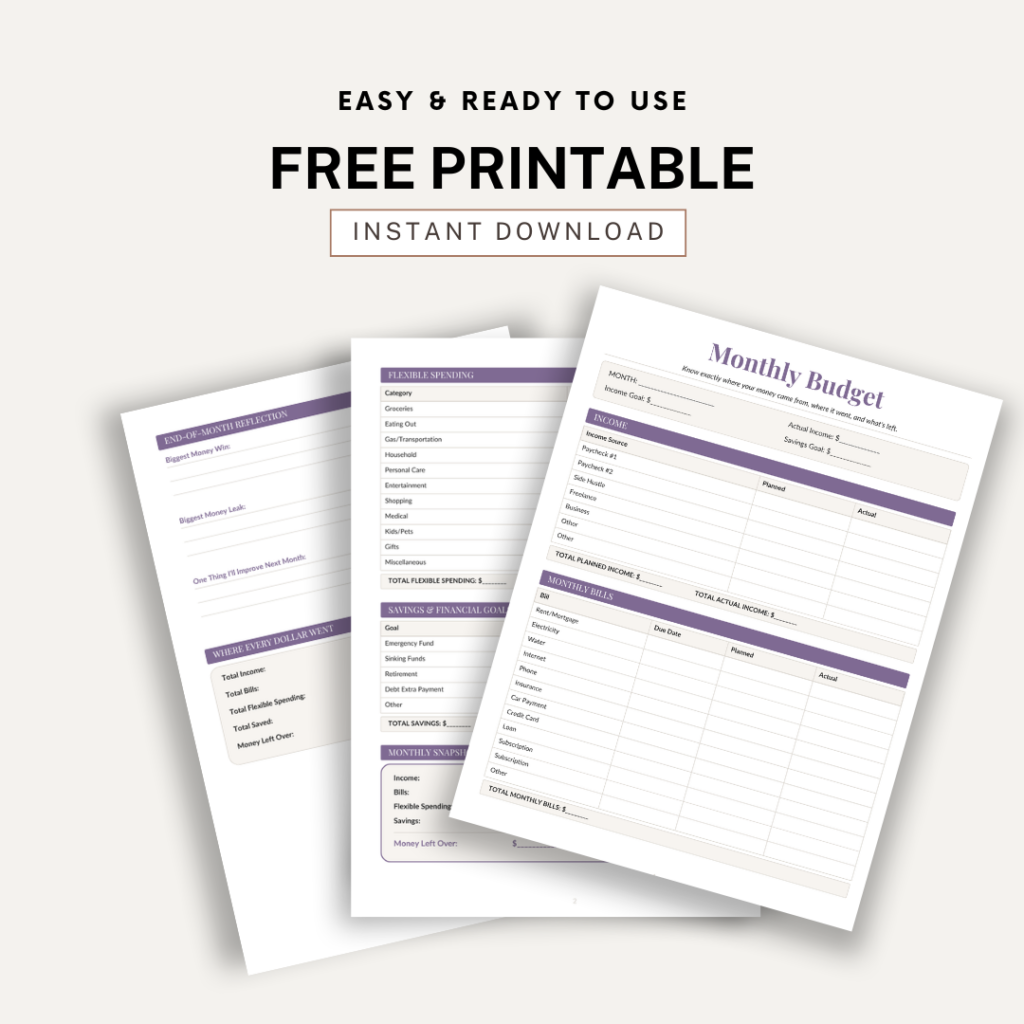
This helps you to have netter control over your finances rather than spending/going through the month blindly.
14. Review Your Monthly Spending
It’s very important to make a budget before the month starts, but it’s equally important to look back at how you actually spent your money during the previous month.
So take a few minutes to review things like your bank account, credit card statements, or any budgeting app you use and ask yourself a few simple questions.
Where did I spend more than I expected?
What purchases brought me the most value?
What did I buy that I probably could have skipped?
Is there anything I want to spend less on next month?
Don’t judge yourself too much here. You’re just trying to see patterns so you can work on fixing them.
Looking back helps you make better decisions as you go into the new month. After all, you can’t improve your spending habits if you never stop to see where your money actually went.
15. Set Up A Small Savings Transfer
This is a great thing to add to your end of month reset. Even if it’s $5, $10 or $20. Having this small automatic transfer helps you to keep a little bit more of your money to yourself. And this a great habit to build as life keeps more expensive.
This is a great thing to set up before the new month starts and your money gets pulled in a hundred different directions, especially if you find it hard to save money every month or end up saving nothing most months.
You can also check these out these saving challenges ($500 Savings Challenge and 52 Week Savings Challenge) if you want something with an actual goal and some more structure.
16. Do A Complete Brain Dump

Whether you use it for journaling, planning, note-taking, or morning brain dumps, this hardcover notebook is a great everyday option. It has lots of pages, thick paper, and a clean, classic look that makes it easy to reach for again and again.
Before the month ends, write down absolutely everything that’s taking up space in your mind. Include unfinished tasks, appointments you need to make, errands you’ve been putting off, ideas you don’t want to forget, and anything else that’s been quietly following you around all month.
Once everything is on paper, look for the items that are simply “loose ends”—i.e all those small unfinished tasks that you could realistically wrap up before the new month starts. Cross off what you can, schedule what you can’t, and move the rest to your master to-do list.
17. Restock Everyday Essentials
Pay attention to supplies like:
- toilet paper
- laundry detergent
- dish soap
- toothpaste
- shampoo
- trash bags
- paper towels
Running out in the middle of the month is never fun so stock up on these asap or at least add those you’re running low on to your shopping list.
18. Finish One Task You Keep Carrying Forward
Do you have that one task you’ve rewritten on multiple to-do lists or repeatedly told yourself you’ll get to throughout the month and close that loop?
This is not the time to clear your entire to-do list before the month ends. But, completing that one thing that has been on your mind for days or weeks will provide a great sense of relief as you clear this mental load.
19. Reset Your Digital Life
Take a few minutes to reset your phone too. Delete things like blurry photos, screenshots, unused apps, downloads, duplicate files, unused or unnecessary notes etc.
And if you have some extra time, also clear your desktop and organize important documents.
20. Clean Out Your Car
Your home isn’t the only place that deserves a quick little reset before the month ends. If you’re like me (and most other people) your car can quickly become a second storage space for water bottles, receipts, snack wrappers, shopping bags, loose change, and anything else you’ve tossed inside while rushing from one place to another.
As part of your end-of-month reset, spend just ten or fifteen minutes giving your car a quick refresh.
Throw away any trash, remove items that don’t belong there, vacuum the seats and floor if needed, wipe down the dashboard, and organize the glove compartment or center console.
While you’re at it, check that you have the basics, such as an umbrella, reusable shopping bags, sunglasses, or anything else you like to keep in your vehicle.
Frequently Asked Questions
When should I do an end of month reset?
Most people do their monthly reset during the last one or two days of the month. If those days are busy for you, choose the last weekend of the month instead. The exact date doesn’t matter as much as making it a consistent habit.
How long does a monthly reset take?
A basic monthly reset can take 45 to 120 minutes. If you spread it throughout the day or over a weekend, it feels even more manageable.
Do I need to do every task every month?
No you don’t. Think of this list as a menu, not a rulebook. You can pick the tasks that will make the biggest difference in your own life and try to build a routine that feels realistic enough to repeat month after month. That’s the biggest takeaway here: Make sure it fits into your life and it makes a difference in your life so you can keep at it consistently.
When it comes to the the start of a new month, you don’t need to overhaul your entire life right before the calendar flips. A handful of intentional habits can help you leave the stress of the previous month behind and begin the next one feeling more organized, more in control, and far less overwhelmed.
Start with just a few items from this list, then build your own monthly reset routine over time. Before long, welcoming a new month will feel less like catching up and more like getting a fresh start.