

Christmas has a very funny way of sneaking up on you every year. One minute it’s summer, and the next, you’re scrambling to buy gifts, stock the pantry, decorate the house and figure out how you’re going to pay for it all.
This year can be different. Instead, of stressing, you can start a Christmas savings challenge that’ll help gather $1000 in the next 6 months so that Christmas can be enjoyable without reliance on credit cards or stressing about the bank account.
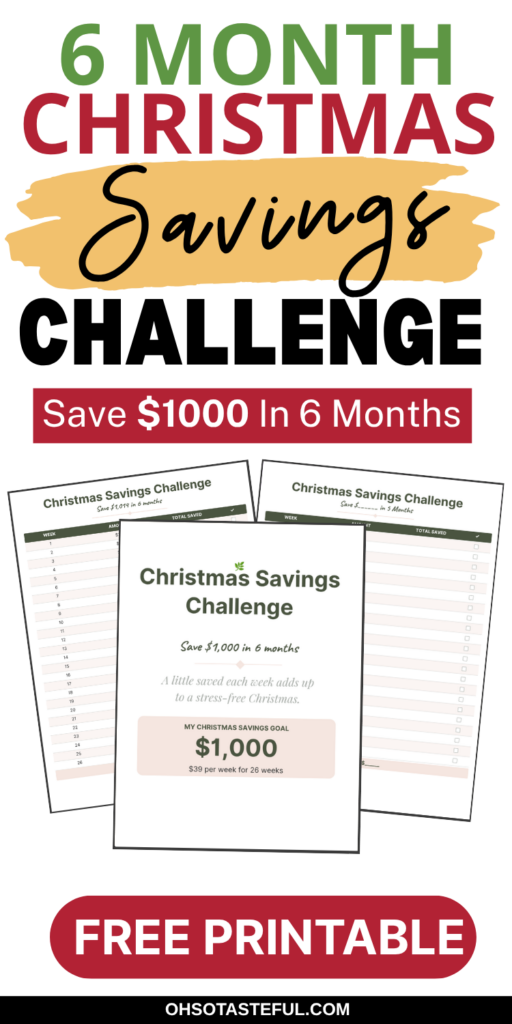
And the best part? You don’t need to save hundreds of dollars every week. If you just break down the big goal into smaller amounts, saving for Christmas feels much more manageable.
Why Start Saving Six Months Before Christmas?
Six months gives you enough time to build your Christmas fund without making your regular budget feel impossible to work with.
It’s harder to try to come up with $1,000 or more in November, but if you’re spreading that cost across half the year, that means you will have less financial stress, no last-minute panic and a Christmas that’s actually enjoyable.

What Can $1,000 Cover at Christmas?
Before we get into the challenge, let’s talk about why $1,000 is such a great savings goal for Christmas.
For many families, Christmas isn’t just about buying gifts since there are also lots of other little expenses that can quickly add up if you don’t plan ahead. Saving $1000 makes it easier for you to get all the things you need without stress such as:
Christmas Gifts: $550
Christmas Dinner & Groceries: $200
Decorations: $75
Wrapping Paper & Gift Bags: $50
Holiday Activities: $75
Miscellaneous Expenses: $50
Total $1,000
This is just a simple example, so of course, everyone’s holiday budget will look a little different. This example just shows how you could theoretically make this amount of money work for Christmas!
Christmas Savings Challenge Breakdown
You can more easily get to your target of $1,000 in six months by breaking it down into smaller bite sized goals. Choose what works best for you:
Monthly: You’ll need to save about $167 per month.
Every Two Weeks: You’ll need to save about $77 every paycheck if you’re paid biweekly.
Weekly: You’ll need to save about $39 every week.
When you break the challenge down into smaller goals like this, it makes it much easier to stay consistent.
And, this is how it looks as the months pass by.
| Month | Total Saved |
|---|---|
| Month 1 | $167 |
| Month 2 | $334 |
| Month 3 | $501 |
| Month 4 | $668 |
| Month 5 | $835 |
| Month 6 | $1,000 |
Pretty doable, right?
And keep in mind that you don’t have to save perfectly every single week. Missing one week doesn’t mean you’ve failed. Once you pick up where you left off and keep going, you’ll do fine!
Starting Later Than Six Months?
The challenge spans over a 6-month period. However, if you’re reading this and there are fewer than six months left until Christmas, you haven’t miss your chance yet so don’t worry.
If you ask me, saving over six months gives you the most flexibility, but, you can still build a meaningful Christmas fund by adjusting your weekly savings goal so it suits the time you have left.
For example, this is what you’ll need to save based on how much time you have left before Christmas:
| Time Left | Weekly Savings | Monthly Savings | Total Goal |
|---|---|---|---|
| 6 months (26 weeks) | $39/week | $167/month | $1,000 |
| 5 months (22 weeks) | $46/week | $200/month | $1,000 |
| 4 months (17 weeks) | $59/week | $250/month | $1,000 |
| 3 months (13 weeks) | $77/week | $334/month | $1,000 |
| 2 months (9 weeks) | $112/week | $500/month | $1,000 |
The best time to start this Christmas savings fund was six months ago. But the second-best time is today!
And, the important thing isn’t really when you start. The most important thing is that you’re giving yourself a head start instead of waiting until December to scramble for every cent you can to make Christmas great!

If you’re stressing out about where you’ll find an extra $39 each week, don’t worry. Below, I’ll share a few simple ideas that can make this challenge much easier.
Simple Ways to Find an Extra $39 Each Week
One of the biggest myths about saving money is that you need to earn significantly more. You don’t. While earning more money surely does help, you can also make some small changes that will help you come up with the extra money you need to save.
Here are a few ideas you can try.
Skip One Takeout Meal
Cooking one extra dinner at home each week can easily save you $20 to $40. That’s already most of your weekly goal!
Sell Things You No Longer Use
Look around your home for items collecting dust that are useful and people are willing to buy. Things like old electronics, clothes, furniture, kitchen gadgets, toys, and home decor can quickly turn into Christmas savings through online marketplaces or local selling groups.
Set Aside Windfalls
Anytime you receive some unexpected money, consider saving part of it towards your Christmas savings. Windfalls can include:
- Tax refunds
- Birthday money
- Cashback rewards
- Overtime pay
- Bonuses
Even just saving half of any windfalls can give your Christmas fund a huge boost.
Cut One Subscription
If you happen to have a streaming service or subscription box you barely use, consider pausing it for the next six months and save up that month to cover a few weeks of the challenge.
Add A Few “No-Spend Days”
Choose one day every week where you don’t spend any money at all. If you do this, you may be shocked by how much you can save simply by avoiding convenience purchases that usually go under the radar. Then add that money to your Christmas savings!
Automate Your Savings
Besides these tips above, one of the easiest ways to complete this Christmas savings challenge is to make saving automatic.
This mean, if possible, set up an automatic transfer of $39 every week (or $77 every two weeks if you’re paid biweekly) into your Christmas savings account.
This way, you’re saving up first before you have a chance to spend the money elsewhere.
Sometimes the less you have to think about saving, the easier it becomes to stay consistent over the next six months.
Keep Your Christmas Money Separate
Another important thing you should keep in mind is this. One big mistake many people make is mixing their Christmas savings with everyday spending money or other savings. First of all, doing this makes it harder to keep track of your Christmas savings. But, it also makes it super easy for you to slip up and spend money you shouldn’t whether unknowingly or not.
So make sure to keep that money separate. You can do this by creating/having a dedicated savings account, getting a separate cash envelope, or a budget binder or a labeled savings jar.

A budget binder with cash envelopes gives you one dedicated place to store and track your Christmas savings. Label one envelope “Christmas Fund,” add your weekly amount, and watch your progress grow without mixing the money into your everyday spending.
Download Your Free Printable
Keeping track of your progress is much easier when you can actually see it. I’ve created this simple free printable Christmas savings tracker that can help you:
- Track your progress.
- Stay motivated.
- See how close you are to your goal.
- Keep your holiday budget organized.
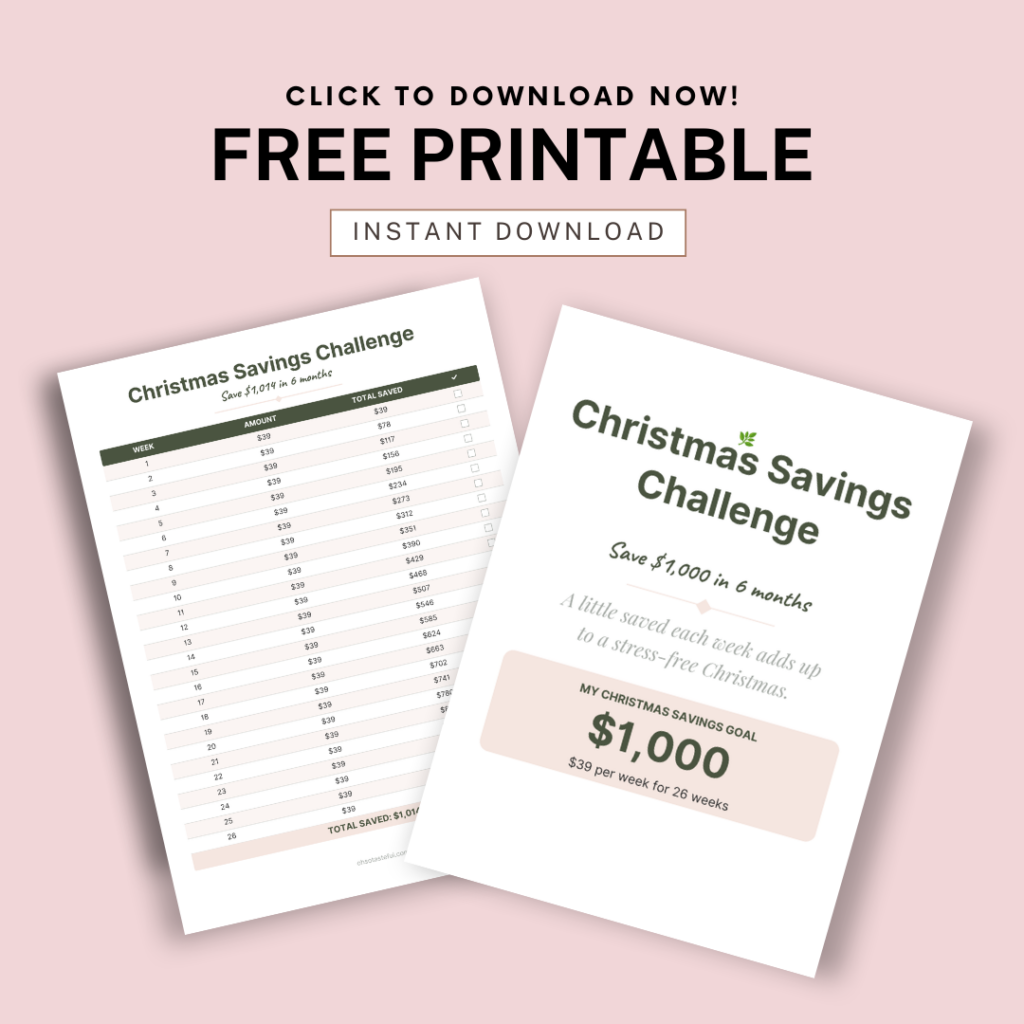
Just print it out, stick it on the fridge, or keep it in your budget binder, then check off each milestone as you save toward Christmas.
You’ve Got This!
The holidays should a time when you’re excited and enjoying yourself—not a time of financial stress.
Starting this Christmas savings challenge six months before the holidays gives you enough time to build a $1,000 Christmas fund without completely disrupting your budget and this will make your holidays so much easier!
Just imagine how good it’ll feel walking into December knowing Christmas is already paid for. And you can do this just by saving a little each week. I mean, who else doesn’t love holiday fun without starting the new year with credit card debt!