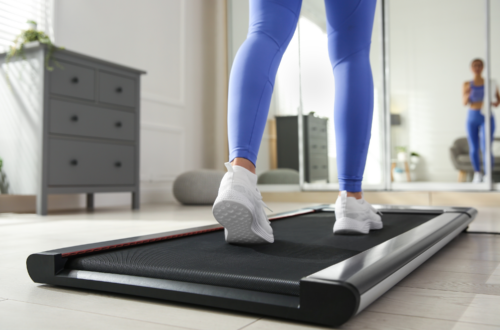

If you’ve ever tried daily walking before, you know that starting the walking challenge is the easy part. Sticking with it is where most of us seem to get it wrong.
Most people begin a daily walking challenge with tons of motivation, big promises and maybe even some cool, new gadgets. Many people even get through the first few days or the first week. But by week two, it’s easy for your daily walking routine to become less of a priority because so many other things are happening at the same time—busy days, oversleeping, boredom, tiredness, or simply losing that initial burst of motivation. Before you even realize it, your walking challenge has quietly fizzled out or come to a stop.
I’m speaking from experience here. In fact, I did this over and over again for years, so I know this struggle personally.
The good news is that you can stick to your daily walking challenge for the long term and it has nothing to do with willpower or copious amounts of motivation.
I’ll show you a list of 11 useful hacks you can use to make walking super easy so you don’t feel like skipping it after only three days!
And the best part is that these small tips and tricks work whether you’re trying to walk 5,000 steps, 8,000 steps, 10,000 steps or more every day!
So, if you’ve struggled to stick to your daily walking challenge, keep reading to see those simple tricks that will help you build a walking habit you can actually keep long term.
Why Most People Quit a Daily Walking Challenge
This is strictly my opinion based on personal experience over the years, but I think that most people quit daily walking challenges because they’re trying to change too much all at once.
What I mean by this is that many times, a daily walking challenge also comes with a side of:
- waking up at 5 a.m.
- drinking a gallon of water every day
- meal prepping
- exercising every day
A few days of this, on top of everything else that’s happening in your life (including work, school, family obligations, hobbies etc.) will have anyone exhausted and ready to throw in the towel in a few short days.
So, if you want to still be walking daily six months from now, you’ll want to consider taking on one new challenge at a time, orienting yourself, making it a solid habit that you’re doing everyday or most days, then consider adding something new into your life.
You’re more likely to see success in your daily walking challenge if you make your walks easy enough that you’ll still want to walk again tomorrow.
I felt like I really needed to share this tip because I’ve experienced this exact same thing over and over again. It took me years of starting and stopping to finally realize what I was doing wrong: I was trying to change too much at once. Once I stopped making walking part of some huge lifestyle overhaul and focused on simply getting my steps in, it became much easier to stay consistent.
Now that this is out of the way, here are the simple tricks that can help you stick to your walking challenge without quitting.
1. Lower Your Step Goal Before You Feel Like Quitting
First things first. Make sure you’re not overwhelming yourself every day by having a rigid “all-or-nothing” mindset. If your daily goal is 10,000 steps, chances are you may not hit that goal every single day. And that’s totally okay.
While you want to strive for that as much as possible, it’s easy to feel discouraged and quit if you go a day or two without hitting the perfect number of steps.
To avoid this, give yourself a few levels to aim for:
- Gold Day: 10,000 steps
- Silver Day: 7,500 steps
- Bronze Day: 4,000 steps
Also, if 10,000 steps still feels like a lot right now, you can also start with a slightly smaller goal. Here’s how to walk 8,000 steps per day without letting it take over your entire day.
Again, your goal is to aim for a Gold Day as often as you can. But for days when life gets busy or you’re feeling tired, a Silver or Bronze Day still counts and gives you space so you don’t feel like failing is inevitable and quit.
2. Never Skip Two Days In A Row
If you’ve ever tried walking consistently over a period of time, you know that once you miss two days in a row, it’s much easier for that challenge to quietly come to an end. We don’t want that.
Therefore, as much as possible try not to miss more than one day at a time lest your ruin your momentum. And definitely do not miss three days in a row!
Having said this, I know that life will happen and you will have to miss a day every once in a while, but again, never let one missed day become two, or worse, three!
If you get back on track immediately, that’ll prevent a small setback from becoming the end of your walking challenge.
3. Turn Every Phone Call Into a Walking Session
Every time your phone rings, stand up and walk. Even if you’re just chatting with a friend, catching up with family, or taking a work call, you can use that time to walk instead of sitting down.
If your calls usually last 10 to 20 minutes, you could easily add up to 1000 or 2000 extra steps without carving out more time in your day.
It’s one of the easiest ways to increase your step count because you’re pairing walking with something you were already going to do. And, if the conversation is juicy or very important, you might even forget you’re pacing around!
4. Stop Thinking Every Walk Has to Be a “Real” Walk
When it comes to sticking to a walking routine, one of the biggest challenges and reasons why people quit is because they think walking only counts if it’s in the form of a dedicated workout.
This means that every walk has to happen on a walking trail, at the park, around the neighborhood, on a treadmill, or more often lately on a walking pad.
But, this is not really true. Your daily step goal is made up of all the movement that you get throughout the day, not just one long walk.
As such, you can get your steps in by:
- Walking around your house while dinner cooks.
- Taking an extra lap around the grocery store.
- Parking farther away from the entrance.
- Pacing while waiting for your coffee to brew.
- Walking around the house while folding laundry.
- Walking back and forth while brushing your teeth.
- Taking the stairs whenever you can.
- Walking during phone calls.
These things may not even feel like exercise, but you’re still moving and accumulating steps throughout the day.
If you do more of these movements, you won’t always need to fret about fitting in those long boring walks every day. Just doing these little bursts of movement can easily add hundreds or even thousands of extra steps throughout the day. But, to make sure you’re doing this right, you need some form of tracking.
5. Make Walking Your Entertainment Time
Besides squeezing in steps through everyday movement, you can also make your dedicated walks part of your entertainment time. Here’s how.
Save a favorite podcast, audiobook, playlist, YouTube video, or TV show specifically for your walks. It gives you something to look forward to besides the exercise itself.
On most days, I grab my laptop, set it on my standing desk, jump onto my walking pad with a good TV series or my favorite playlist and just walk until I get to my goal!
6. Track Your Progress Throughout The Day
Very few things will keep you more motivated than seeing your progress. At least, that’s how it is for me. There are plenty of ways to track your daily steps, including:
- a smartphone (iPhone or Android with Apple Health or Google Fit)
- a smartwatch (Apple Watch, Galaxy Watch, Garmin, Fitbit, etc.)
- a fitness tracker
- a pedometer
I like using a combination of a fitness app and a smartwatch.
The app lets me see my daily, weekly, and monthly progress and the watch helps me to track every single step I take every day. This is very important since I don’t only do official walks (these are too tedious and boring to me so I can’t do them long term), but I combine steps from errands, phone calls, my walking pad, daily chores, etc into my daily steps so I don’t quit or feel overwhelmed, but still get lots of movement every day.
Like i said, I personally prefer using a smartwatch because I don’t always have my phone on me while I’m moving around the house. This is the watch I use to track my daily steps, and I like being able to glance down throughout the day and immediately see how close I am to my goal.

If you're like me and hate carrying your phone everywhere, some type of wearable can be incredibly helpful so you don't miss any steps from regular daily activities.
7. Break Your Steps Into Smaller Walks
Whether you’re sticking to official walks or getting your steps in via everyday movement, you don’t have to finish everything in one session. Instead, a simple hack you can use is to try breaking up your walk so it’s more manageable throughout the day. Try it like this:
- 2,000 before work
- 2,000 during lunch
- 3,000 after work
- 3,000 after dinner
If 10,000 steps is your daily goal, I have a whole guide on how to walk 10,000 steps every day with even more realistic ways to squeeze those steps into your normal routine.
This makes it so much easier to stick to walking if you’re doing it like this instead of trying to do an hour-plus walk in one go which can be intimidating.
8. Make A Backup Bad Weather Plan
I walk indoors for the most part and I know a ton of people who do the same. But, not everyone likes to walk indoors. If you prefer walking outdoors, things like the rain or the heat do not have to end your walking challenge.
Therefore, think about creating a plan for things that are out of your control. When it’s too hot or the weather is bad, you can walk:
- indoors (or on a walking pad)
- around your house
- in a mall
- grocery store
- airport terminal
- covered parking garage
- up and down stairs
Having a backup plan will instantly remove one of the biggest reasons people quit.
And if you want to make indoor walking part of your routine, try my 28 Day Indoor Walking Challenge. It’s especially helpful for busy beginners who want a simple way to get consistent with walking without depending on the weather.
9. Stop Thinking About the Whole Month
Let yourself think in terms of days instead. After all 30 days can sound very intimidating, but if you just focus on getting through today’s walk then repeating this again tomorrow, you’ll see how much easier it is to manage those walks long term.
10. Give Yourself Permission to Walk Slowly
Many people think every walk needs to feel like a long arduous power-walking session. If you can do this, then kudos to you. You’re doing great.
But, if all you can manage is a walk at a comfortable speed, you’re still doing a fantastic job. Especially if you’re just starting out and haven’t been walking in a while. So, go slow. As long as you get your steps in, you’re building up your walking endurance and building the habit.
11. Get Yourself A Walking Pad
I have a walking pad. I love it and I attribute a lot of my success to it.
Therefore, I think everyone should get a walking pad. After all, it costs about $200 and makes daily walks feel like a breeze.
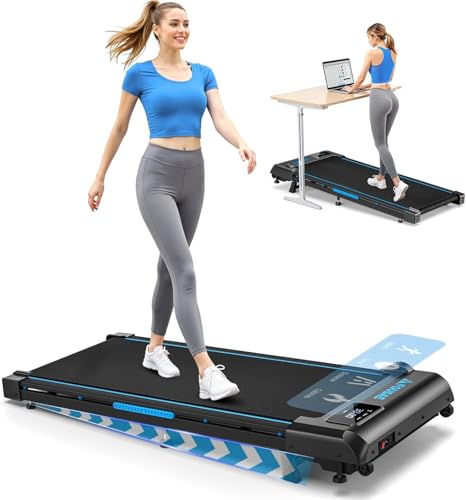
This is a great option if you want to get more steps at home without committing to long outdoor walks. It goes up to 6.2 MPH, has a 9% incline, 12 workout programs, and a sturdy double-frame design. I especially like that you can use it for easy walking while watching TV or working, but still increase the speed or incline when you want a more challenging walk.
Having said this, I must say something else. A walking pad is not a be-all and end-all.
Some days, I don’t even look at it. I get my steps in by pacing back and forth around my house or dancing to TikTok videos (learning dance choreos that I like) or running my plethora of errands—when I don’t feel like using my walking pad or pacing, I pack as many outside errands into my day as I can to accumulate steps.
But, there are other days when I just can’t stomach the idea of all that pacing or dancing and I don’t have that many errands and those are the days when my walking pad saves the day. It gives me that extra option that won’t bore me to death.
On those days—which are actually the majority—I just plop my laptop onto my standing desk (which is above my walking pad), find something interesting to watch and get to walking!

If you work from home, a standing desk makes a walking pad dramatically more useful. Being able to answer emails, attend meetings, and work while getting your steps in can make reaching 10,000 steps feel much easier.
This is made even easier, because I keep it set up all the time, so I never give myself any excuse.
If you’ve been finding it hard to stick to an ever day walking routine, I highly recommend that you get a walking pad. This is the one I use and love along with the standing desk I use and love.
Common Daily Walking Challenge Mistakes
Avoid these common pitfalls If you want to stick to your walking challenge long term:
- Starting with goals that are too ambitious.
- Trying to make up for missed days by walking twice as much.
- Comparing yourself to other people’s progress.
- Waiting until you “feel motivated.”
- Quitting after one bad week.
- Thinking every walk has to be long or intense.
Frequently Asked Questions
Is it okay to miss a day during a daily walking challenge?
Yes. Missing one day won’t erase your progress. The key is getting back to your routine the next day instead of letting one missed walk turn into several.
How many steps should I aim for?
Choose a goal that fits your current fitness level. For beginners, even 4,000–6,000 daily steps can be a great starting point. As walking becomes a habit, you can gradually increase your goal.
What if I don’t have time for one long walk?
Split your steps into shorter sessions throughout the day. Three or four 10- to 15-minute walks are just as effective for reaching your daily goal.
Do I need special equipment?
No, you do not need any special equipment to start a daily walking challenge and stick to it. But, a comfortable pair of walking shoes is a great investment. Also, if you walk indoors, a walking pad can also make it easier to stay consistent when the weather isn’t ideal.
The biggest thing I’ve learned is that sticking to a daily walking challenge gets much easier when you stop making walking harder than it needs to be. Some days I use my walking pad. Other days I pace around my house, run errands, dance, or break my steps into tiny chunks throughout the day. It all counts.
You don’t need a perfect 30-day streak or a perfect 10,000-step day every single day. You just need to make walking easy enough that you can keep coming back to it.
And if you miss a day? Get back to it tomorrow.