
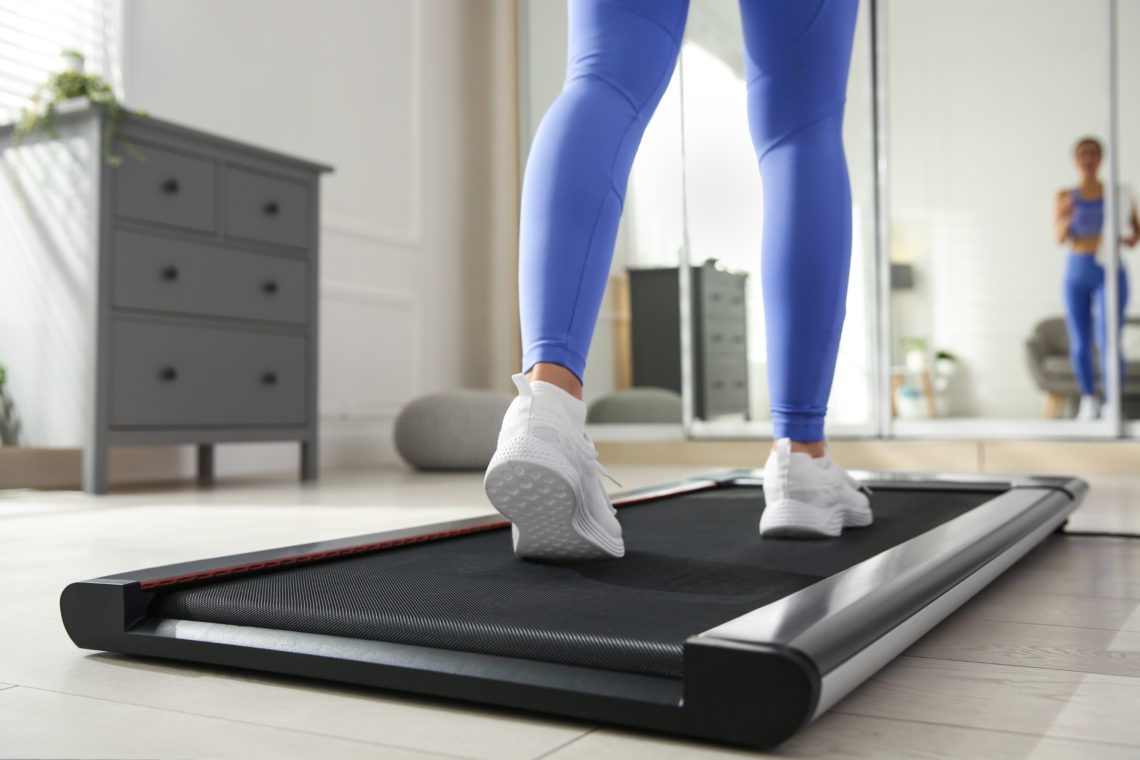
If getting enough steps every day feels like one more thing you have to somehow squeeze into an already packed schedule, especially on those days when you’re sitting at your desk for hours, running errands, getting things done around the house, or simply don’t have the time or energy to go out for a proper walk, then having a simple walking pad routine can make getting more movement into your day so much easier.

I’m a huge fan of walking, but I’ve also realized that I’m much more likely to stick with it when it’s super easy to get done, as opposed to making a walk into this big event that requires me to get dressed, leave the house, drive somewhere, find a trail, go to the gym, or block off an entire hour of my day for walking.
Which is exactly why I like the idea of using a walking pad as part of a normal daily routine, because you can get on it for 10 or 15 minutes in the morning, squeeze in another short walk later in the day, walk while you’re on a phone call, or even get some extra steps while watching something you would have been sitting down to watch anyway.
Instead of constantly trying to find time to walk, which can be surprisingly difficult on busy days, you’re basically finding little pockets of time throughout the day where you can walk while doing something you were already going to do.
And for me, that feels so much more realistic which is why I’ve finally been able to stick to my daily walking routine for over a year!
So, if you’ve recently bought a walking pad, have one sitting in the corner that you barely use, or you’re simply trying to figure out how people actually incorporate these things into their everyday lives, here is a simple daily walking pad routine that you can adjust to fit your schedule.
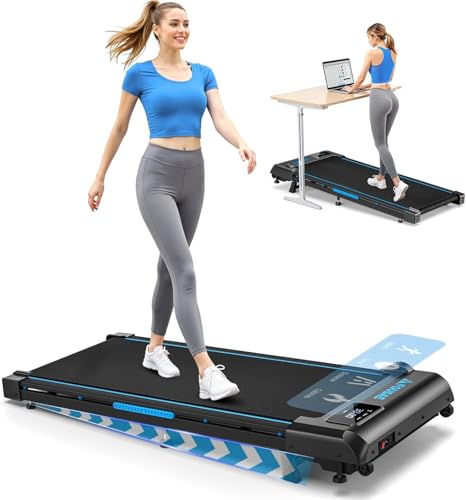
My Simple Daily Walking Pad Routine
One of the biggest mistakes I think you can make when trying to use a walking pad consistently is deciding that you suddenly need to spend an hour or more walking on it every single day.
You certainly can do one long walking session if that is something you genuinely enjoy, but if the thought of standing on a walking pad for an hour already sounds tedious, there is absolutely no reason you have to do it that way.
Personally, I think it is much easier to spread your walking throughout the day so that no individual session feels particularly long or difficult to fit into your schedule.
A normal day could look something like this:
| Time | Walking Pad Routine | Goal |
|---|---|---|
| Morning | 15–20 minutes | Get some easy steps in early |
| Mid-morning/work | 10–20 minutes | Walk during an easy task or call |
| Afternoon | 10–15 minutes | Break up a long stretch of sitting |
| Evening | 20–30 minutes | Walk while watching or listening to something |
| Throughout the day | Normal everyday movement | Let errands, chores and regular life add more steps |
When you look at it this way, you could potentially accumulate 55–85 minutes of walking throughout the day without ever having to find a completely free hour to dedicate to a workout.
But I also don’t think you need to start anywhere near that amount, especially if you’re currently not walking very much or you’ve only just started using your walking pad.
Your first walking pad routine for beginners could be as simple as 10 or 20 minutes in the morning and another 10 or 20 minutes sometime in the evening, and once doing that starts to feel completely normal, you can gradually add more time.
With this, you start to create the right momentum you need to make walking on your walking pad a part of your every day life. And no, you don’t need to be perfect and stick to a perfect routine when you start. You just need to start (small if you need to)and then do it consistently.
Once you make it so that you can fit a walking pad routine into your daily life, you’ll be able to do this every day without giving it too much thought.
Here are some tips that can help you start and stick with it long term.
1. Start With a Short Morning Walk
One of my favorite ways to use a walking pad is to get a little bit of walking done fairly early in the day, because I find that it is much easier to work toward a daily step goal when I’m not starting from almost zero in the afternoon.
Now, this does not need to become some elaborate 5:00 AM routine, like mine is, but the point it to get it out of the way as soon as possible.
For me, I wake up at 5 AM and follow my 5 am morning routine which includes walking for 20 to 30 minutes on my walking pad between 5:40 am and 6:00 am.
Don’t focus too much on my personal timing. Instead, just try to get your first bit of steps in as soon as you wake up.
not only does this help you to build a good walking pad routine, but it helps you get rid of that sluggishness you feel from sleep. And, if you find it boring, you can put on a podcast, play some music, listen to an audiobook, watch a YouTube video, or simply walk for a few minutes while you’re figuring out what you need to get done that day.
What I especially like about doing this in the morning is that once it becomes part of your normal routine, you don’t have to spend the rest of the day negotiating with yourself about when you’re finally going to walk.
It can simply become: Wake up → coffee/water → walking pad → start the day.
Obviously, you can change the order around depending on what your mornings actually look like, but having some kind of predictable trigger for your walk makes it much easier to turn it into something you automatically do rather than something you constantly have to remember.
Make Your Morning Walk Ridiculously Easy
If you know you’re the kind of person who can talk yourself out of doing something because it suddenly feels like too much work, try removing as many tiny inconveniences as possible before you even go to bed.
Leave your walking shoes near the walking pad, charge your headphones the night before, decide what you’re going to listen to or watch the night before, and make sure you don’t have to move five things out of the way just to turn the machine on. In fact, if you have the space to keep it set up, do that.
None of those things may seem particularly important right now, but when you’re trying to build a routine, making things super easy to start will go a long way in helping you keep up with the ch
2. Sneak In Another 10–20 Minutes During the Day
This is probably one of my favorite things about having a walking pad at home, because it gives you an incredibly easy way to turn random bits of downtime or sitting time into extra movement.
If you work from home, for example, there are probably at least a few tasks you do every day that don’t require you to sit completely still and concentrate intensely.
For example, those times when you’re checking emails, sitting through a meeting where you’re mostly listening, watching a training video, brainstorming ideas, going through simple admin tasks, or doing something else that you could reasonably do while slowly walking are the perfect times to use your walking pad.

And, if you don’t work from home, you can use the same idea with other things you normally do while sitting, whether that’s taking a phone call, watching YouTube, scrolling Pinterest, listening to a podcast, or catching up on a show. That way, you’re aren’t necessarily adding another task to your day, you’re just changing what you’re doing with your body while you complete something you were going to do anyway.
3. Use the 10-Minute Rule When You’re Falling Behind
There are always going to be days when you look at your step count in the afternoon and wonder how you’ve somehow managed to move so little.
This happens all too often when you’ve been glued to your computer all morning, the weather outside is terrible, or you simply haven’t had much reason to get up and walk around.
And sadly, this is usually the point where a daily step goal can start to feel annoying because you look at the number and immediately calculate how much walking you now have to cram into the evening.
Instead of doing that, get on your walking pad for just 10 minutes.
Ten minutes is short enough that it doesn’t feel like you’re interrupting your entire day, but it’s still enough time to get moving and add some meaningful activity to an otherwise sedentary afternoon.
And the nice thing about telling yourself you’re only walking for 10 minutes is that you can always keep going if you’re feeling up to it.
If 10 minutes passes and you want to stop, stop.
If you get caught up in your podcast and suddenly you’ve been walking for 25 minutes, even better.
Either way, you got some extra movement in without turning it into this huge thing you had to convince yourself to do.
4. Make Your Evening Walk the Easy One
If I were choosing one part of this daily walking pad routine to make slightly longer, I would probably choose the evening session, mostly because there are so many things we already do at night that pair perfectly with walking.
If you’re going to spend 30 minutes watching Netflix, YouTube, TikTok, a movie, or whatever else you enjoy anyway, you can spend at least part of that time walking.
This is where I would aim for somewhere around 20–30 minutes, depending on how much walking you’ve already done throughout the day and how you’re feeling.
But I would also make this the least “workout-like” walk of the day.
Here are some ways to make this happen:
- Pick something you genuinely want to watch.
- Save a favorite podcast specifically for your walking pad.
- Start an audiobook that you’re only allowed to listen to while walking.
- Call someone you can easily talk to for half an hour.
- Put on music that makes the time go faster.
Pairing walking on the walking pad with something I already enjoy doing and was gonna do anyway is like a secret hack that’s helped me keep walking consistently for months on end. Many times, I don’t even remember I’m walking because I’m so engrossed in whatever else I’m doing to think about it too much.
5. Don’t Try To Get Every Single Step on Your Walking Pad
This is probably the biggest mistakes people tend to make when using a walking pad: thinking that every step they take must come from there.
Newsflash, it does not.
I love my walking pad and I use it more than 90% of the time. But, I also get plenty of steps from random activities like:
- Walking around the grocery store
- Cleaning the house
- Walking around while I’m on the phone
- Running errands
- Walking through a parking lot
- Taking the stairs
- Pacing around the kitchen while you’re waiting for dinner to cook
- Sometimes, I even get steps in from learning tiktok TikTok dance challenges
All of those little bits of movement that happen throughout a normal day still contribute to how much you’re actually moving. Therefore, if you’re trying to work your way toward something like 8,000 or 10,000 steps a day, I wouldn’t automatically think:
“I need to walk 10,000 steps on my walking pad.”
Instead, I would think:
“How can I use my walking pad to fill the gap between the steps I naturally get and the amount of movement I’m aiming for?”
Some days that gap might be fairly small because you’ve been running errands, cleaning, shopping or moving around a lot.
Other days, especially if you work from home and spend hours sitting at a computer, your walking pad might do much more of the heavy lifting.
An Easy Walking Pad Routine for Beginners
Nevertheless, if you just bought your first walking pad, I wouldn’t immediately decide that you’re going to start walking on it for two hours every single day.
Doing it gradually will go a much longer way in helping you stick to your walking pad routine for months to come. And starting your first day at a 2 hour walk is the surest way to burn yourself out and abandon the whole thing within a week, unless you’re really good at starting hard things and sticking to them.
If you’re not, here is a more realistic walking pad routine for beginners:
Week 1: 15–20 Minutes a Day
For the first week, I would focus almost entirely on getting used to actually using your walking pad consistently rather than worrying about how many calories you’re burning, how far you’re walking, or whether you’re getting enough steps.
You could simply walk for 10 minutes in the morning and another 10 minutes later in the day.
That’s it and that’s all.
Week 2: 20–30 Minutes a Day
Once those short walks start feeling fairly normal, add another 5–10 minutes somewhere in your day or make one of your existing walks a little longer.
For example, you could do 10 minutes in the morning, 10 minutes in the afternoon and another 10 minutes in the evening. Or you can do, 15 minutes in the morning and 15 minutes in the evening.
Week 3: 30–45 Minutes a Day
By week three, you can start experimenting with slightly longer walks or adding more walking to the parts of your day where it naturally fits.
Maybe you do 15 minutes in the morning, 10 minutes during your workday and another 20 minutes while watching something at night.
Week 4: 45–60+ Minutes Throughout the Day
At this point, you may find that using your walking pad has simply become something you naturally do throughout the day which is exactly where you want to be.
By the way, you can choose to stay at this timing indefinitely if you find that this is what you can keep doing consistently.
Walking for this length of time will help you get about 4,500 to 6,000 steps per day which is pretty great.
But, if you wan to keep increasing your daily step goal, keep reading.
Walking Pad Routine for 10,000 Steps a Day
If your goal is to eventually get 10,000 steps a day, having a walking pad together with a solid routine is gold.
Getting in 10,000 steps per day takes roughly about 75–100 minutes of walking.
Most people with busy schedules do not have that kind of time to dedicate to a long walk. But a walking pad helps to make this easier by conveniently breaking up your daily step goal right from the comfort of your home.
For example, you can do 20 minutes in the morning, 20 minutes during the day, and 40 minutes in the evening while you enjoy a podcast, episode of your favorite show or some music, which is perfect when you have those low motivation days.
I have a more comprehensive 10000 Steps Walking Challenge that you might want to check out.
How To Actually Stick To Your Walking Pad Routine
Buying a walking pad is the easy part.
Actually using it regularly is where things can get tricky, because even the most exciting new piece of equipment can eventually become something you step around every day if using it feels inconvenient.
So, instead of relying on motivation, I would focus on making walking as easy to start as possible.
Keep Your Walking Pad Somewhere You Can Actually Use It
If every walking session starts with dragging the machine out of a closet, moving your coffee table, untangling a cord and rearranging half of your room, there are going to be plenty of days when you simply don’t bother.
If you have the space, try to keep your walking pad somewhere you can start using it within a minute or two, even if that means sliding it underneath your desk, sofa or bed when you’re finished.
Give Yourself Walking-Only Entertainment
This is one of my favorite little tricks because it gives you a reason to actually look forward to walking.
Find a show, audiobook, podcast or YouTube series that you really enjoy and make it something you’re only allowed to watch or listen to while you’re walking.
If you desperately want to know what happens in the next episode, well, I guess you’re getting on the walking pad.
Track Your Progress
Seeing how much walking you’ve actually done can be surprisingly motivating, especially when you start noticing that those random 10-minute sessions throughout the day are adding up to quite a lot of movement.
You can track your steps using a smartwatch, fitness tracker, pedometer, your phone, or whatever tracking features are available on your walking pad.
And if you don’t have a device that counts steps, what are you waiting for? There are a ton of really cheap options you can try out.
Tracking you walks and especially seeing those numbers (steps and time) is the one of the biggest motivational boost you can get!

Keep Your Walking Shoes Beside the Pad
This sounds ridiculously simple, but I think that’s exactly why it works.
If you’ve finally convinced yourself to squeeze in a quick 10-minute walk, the last thing you want to do is spend time trying to find the shoes, then the socks and even your headphones.
Put everything you normally use for your walk in the same general area so that getting started requires almost no thought.
What You Actually Need for a Walking Pad Routine
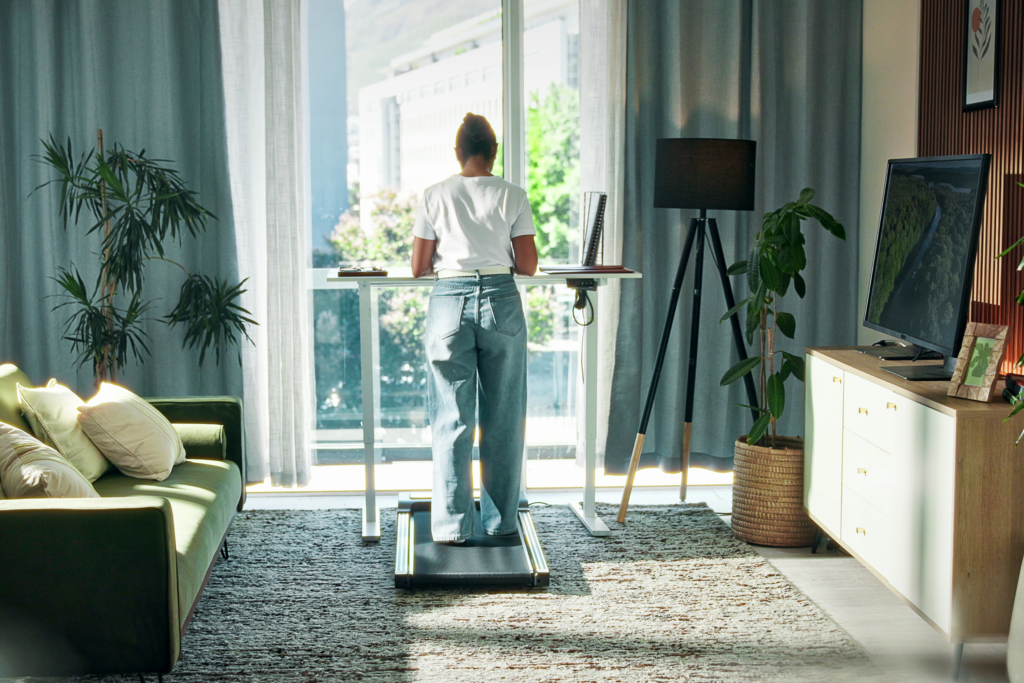
The nice thing about starting a walking pad routine is that you really don’t need a huge collection of equipment, but there are a few things that can make your setup much easier and more comfortable to use consistently.
A good walking pad: Look for something that fits your available space, has a weight capacity and speed range that work for you, and can be stored fairly easily if you don’t have enough room to leave it out permanently. See the walking pad I recommend for this routine.
Comfortable walking shoes: You don’t necessarily need an expensive pair of shoes specifically for your walking pad, but you do want something that feels comfortable enough for the amount of walking you’re planning to do because your feet will start to hurt in the first month or two of walking.
A way to track your progress: This could be a smartwatch, inexpensive fitness tracker, simple pedometer, a fitness app on your phone, or the tracking system that comes with your walking pad. You can check out my this affordable easy-to-use step tracker here.
A standing desk: You definitely don’t need one if you’re only planning to walk while watching TV or listening to something, but if you want to use your walking pad while working from home, an adjustable standing desk can make the entire setup much more practical. This is the adjustable desk I’d pair with a walking pad.
A walking pad mat: This is another optional extra, but depending on your flooring and walking pad, a treadmill or equipment mat can be useful for protecting the floor underneath and creating a more permanent little walking area. Check out this walking pad mat to use underneath it.
Start This Walking Pad Routine Tomorrow
If you want to start using your walking pad more consistently, I wouldn’t spend too much time trying to create the perfect schedule before you begin.
Tomorrow, try 15 minutes in the morning, 10 minutes sometime during the middle of your day and another 20 minutes while you’re watching or listening to something in the evening.
That’s 45 minutes of walking broken into three much more manageable chunks, and because you’re spreading it throughout the day, it doesn’t feel nearly as intimidating as looking at your schedule and trying to figure out where you’re supposed to find 45 completely free minutes.
From there, adjust it.
Maybe you realize you love walking in the morning and want to make that session longer, or maybe mornings are terrible for you but you can easily walk for half an hour at night while watching TV.
Maybe you don’t need three sessions at all.
The point isn’t to copy someone else’s walking pad routine perfectly.
It’s to use the basic idea, move things around until they fit your actual life, and eventually create a routine that feels so normal and easy to repeat that getting more walking into your day no longer feels like something you constantly have to plan for.