

If lately you’ve been realizing that your morning routine can use some upgrades, then you’ve come to the right place. Most of us want to have a productive morning routine, but, with all of life’s distractions and responsibilities it’s sometimes so difficult to build one, and actually stick to it for a long time.
You see people talking about their 6 AM, 5 AM or even 4 A.M morning routines and you’re confounded with how that’s even possible, when you’re constantly having to drag yourself out of bed just before 7:30 A.M if you’re lucky.
By then, someone who’s naturally good at sticking to an early morning routine has already gotten up at 5 A.M., meditated, journaled, gotten a workout in, had breakfast, answered emails, gotten others or themselves ready, and gotten ready for the day by 8.
Clearly, it’s possible, and plenty of people do it consistently. However, not everyone can—or even wants to—follow such an early schedule. More importantly, you don’t have to wake up at 5 A.M. to have a productive morning routine, because, the best morning routine is one that works with your schedule and is realistic enough that you can actually stick with it.
This simple morning routine for productivity helps you to make the best of your morning in your own way. So whether you wake up at 6 A.M., 7:30 A.M., or even 9 A.M.—and yes, I know fewer people may be waking up that late, but everyone’s schedule is different, and there’s absolutely no judgment here— you can still make your own productive morning routine that you can stick to so the rest of your day feels calm and intentional.
This routine is simple, can be adapted no matter what time you wake up (well…unless you’re rushing out the door 30 minutes after getting out of bed. In that case, the first thing I’d work on is giving yourself a little more time in the mornings), and it doesn’t take hours to complete.
And, the best part of all, is that you don’t need to follow this to a T. It’s more like a blueprint so you can keep what works and adjust what doesn’t to create the perfect productive morning routine that you’ll look forward to following every day … or most days.
Why Your Morning Routine Matters
This isn’t always the case, but, generally, the way you spend your first hour awake often sets the tone for everything that follows.
Have you ever noticed how one rushed morning seems to snowball into an entire rushed day?
You oversleep > You can’t find half the things you need to get out the door > You skip breakfast > You’re running late > You forget something important > And, by lunchtime, you feel like you’ve been playing catch-up all day.
Now compare that to a morning where everything flows naturally because your morning was more intentional.
You wake up on time > You know exactly what comes next > You have time to eat breakfast > You leave the house—or start work—feeling prepared instead of panicked.
There was nothing magical that happened. You just simply removed the unnecessary chaos with the help of a simple, productive morning routine.
This is what this post is trying to help you achieve.
Before You Start
I need to get this out there. You’ll never be 100% perfect at this. Some mornings you’ll sleep through your alarm. Some mornings your kids will wake up early and some mornings you’ll only have twenty minutes so you won’t be able to make the routine work.
And, that’s okay.
Those days are allowed to happen without you making yourself feel bad or guilty for not sticking to it.
As long as you get back on track the next day, you’ll be just fine.
So, let’s see what you need to do to have a productive morning routine.
9 Steps To Build A Productive Morning Routine That Actually Sticks
Step 1: Wake Up at the Same Time Every Day
Waking up at 5 A.M. is great (Hello, 5 A.M. morning routine!), but notice this is not what I said.
Waking up at a certain time consistently is what’s important here. No matter if that is at 5 am, 6 am or even 8 am (yes, I know not everyone goes to a traditional 9-to-5, some work from home, some own their own small business, some are shift workers, nurses, freelancers etc.)
So, again…consistency.
This is going to create the foundation for every other step in your morning routine.
Avoid This Mistake
Also, don’t hit the snooze button five times.
Those extra few minutes usually don’t make you feel more rested. The only thing they’ll do is to make your morning feel more rushed when you do get up.
When the alarm goes off, sit up, put your feet on the floor, and commit to getting out of bed.
I think getting out of bed is the hardest part of any morning routine. Once you’ve done that, you’ve already built a little momentum, and it becomes so much easier to move on to the rest of your routine.
Step 2: Resist the Urge to Check Your Phone

This might be the simplest change you can make—and one of the most powerful.
If the first thing you do upon waking up is to grab your phone (or other device), then you’re putting everyone else’s priorities before your own.
What happens when you pull out your phone? You check social media and get distracted (then proceed to stay there for longer than you anticipated). Or, you go to your emails and check on work, or you see a new headline that raises your stress levels, or a text that pulls your attention into another direction… All before you’ve even gotten out of bed!
Instead of doing any of these, give yourself 30 minutes to an hour before you even check your phone.
Just leave it on your nightstand, or better yet, charge it across the room so you have to physically get up to turn off your alarm. And move away from it an onto other more important things.
Step 3: Drink a Glass of Water and Let Some Light In
Rehydrate after sleep then get up and let some light into your room.
This is important because natural light helps signal to your brain that it’s time for you to wake up.
And, if it’s still dark outside when you wake up, simply turning on bright lights around the house can help you feel more alert.
These two small actions don’t seem significant on their own, but together, they’re subtly telling your body that sleep time is over and the day has begun.
Step 4: Make Your Bed Before You Leave the Room
Simple. Quick. Nothing groundbreaking. But, making your bed does two very important things.
First, it forces you out of bed.
Second, for many people, it does this weird little mental thing where once the bed is made, you don’t want to get back in and mess it up until it’s time to relax or sleep later on. At least it does for me.
Doing this helps you move on instead of lingering in the bedroom.
Step 5: Move Your Body Before You Sit Down
Now it’s time to wake your body up with some form of movement.
Personally, I like walking on my walking pad for about 20 to 30 minutes every morning. It helps wake me up, gets me moving before I spend hours sitting at my desk, and gives me a head start on my goal of walking 8,000 to 10,000 steps each day.
You definitely don’t have to use a walking pad, though. You can do other things like:
- Going for a walk around your neighborhood.
- Stretching for ten minutes.
- Dancing around the kitchen while making breakfast.
- Lifting a few weights if you’re into that
- Following a short yoga video.
Anything that gets you moving counts. This helps you burn a few calories in the morning, increases your energy, improves your mood and helps you shake off any grogginess that may still be lingering.
Try to aim for 15 to 30 minutes if your schedule allows.
If it doesn’t, even five or ten minutes is better than none. You’re trying to build a routine that you’ll still be doing six months from now—so don’t try to do too much at once and then fall off when it becomes too much to handle too soon.
And, if you work from home or don’t always have time to get outside before work, I honestly can’t recommend a walking pad enough. It’s one of my favorite purchases because it removes almost every excuse not to get a few extra steps in. Whether it’s raining, still dark outside, or I just don’t feel like leaving the house, I can still get my walk in before the day gets busy.

Want an easy way to get more steps in without buying a bulky treadmill? This walking pad gives you a simple, space-saving way to move more at home, even on busy days. It’s a practical, budget-friendlier option for small spaces and makes it so much easier to stay consistent with daily movement.
Step 6: Shower and Get Ready Like You’re Going Somewhere
This step is highly important.
Things like changing out of pajamas, washing your face, brushing your teeth, and getting dressed signals to your brain that you’re getting ready to get things done.
If you work from home, you don’t need to wear formal clothes around the house. But even changing into clean, comfortable clothes can make a noticeable difference in how focused and motivated you feel.
I like to make this step easier by picking out my clothes for the day the night before.
Besides that, doing this creates a clear transition between home mode and work mode, helps you feel more put together, reduces procrastination, makes it easier to leave the house unexpectedly, encourages better personal hygiene and prevents the morning from dragging on.
Step 7: Make Breakfast (Without Making Your Morning Harder)
By now, you’re awake, dressed, and ready to get your day started so the next step is making breakfast.
Whether you’re only making breakfast for yourself or you’re also feeding your kids, your partner, or anyone else in your household, try not to overcomplicate this part of your morning.
Weekday mornings probably aren’t the best time to experiment with a brand-new recipe that takes 45 minutes to make.
Instead, keep a handful of breakfasts in your rotation that are quick, filling, and easy to throw together. This is so because the fewer decisions you have to make every morning, the smoother your routine becomes.
If your mornings are especially busy, consider doing a little prep the night before. Things like overnight oats, chopping fruit ahead of time, hard-boiled eggs, or simply setting out everything you’ll need for breakfast can save you valuable time when you’re trying to get out the door or get on with the day. I personally eat high protein meals, so I like to prep my breakfast burritos ahead and freeze them, then I warm them up in the morning. I also always keep my fruit washed and portioned and I always keep Greek Yogurt and some granola on hand. This makes my first meal super easy to throw together.
Once breakfast is finished and everyone’s fed, you’re ready to move on to planning your day.
Step 8: Spend Five Minutes Planning Your Day
Grab a notepad or piece of paper and write down everything you need to do for the day. Don’t overthink it—just get it all out of your head and onto paper.

Whether you use it for journaling, planning, note-taking, or morning brain dumps, this hardcover notebook is a great everyday option. It has lots of pages, thick paper, and a clean, classic look that makes it easy to reach for again and again.
Once you’ve done that, circle your top three priorities. Then add any important meetings, appointments, deadlines, or time-sensitive tasks to your calendar so you know exactly what your day looks like.
Also, even though you may have written down a list of 20 things you’d like to get done, don’t put pressure on yourself to finish every single one. Some tasks can wait until tomorrow, and that’s okay.
Now, look at your top three and ask yourself:
“If I only accomplished one thing today, what would make my day feel successful?”
That’s your top priority.
It doesn’t mean the other tasks aren’t important—they are. But you’re simply deciding which task deserves your best time, energy, and focus before the day’s distractions take over.
Step 9: Start With Your Most Important Task

You’ve made it this far.
You’ve gotten out of bed, resisted the urge to scroll your phone, moved your body, gotten ready, made breakfast, and taken a few minutes to plan your day.
Now don’t waste all that momentum.
Whatever you identified as your biggest priority in the last step, start with that.
Again, it’s not because the rest of your to-do list isn’t important—it is. But because if you don’t intentionally make time for your biggest priority, the rest of the day has a funny way of deciding your schedule for you. Then before you know it, it’s lunchtime—or worse, the end of the day—and the one thing you really wanted to accomplish is still sitting on your to-do list.
Even spending 20 minutes, 30 minutes, or an hour on this task will help to move it forward which is what you really want.
Once that’s done, you can move on to the other things on your list knowing you’ve already tackled the task that mattered most. Even if you don’t get through everything before the day is over, you’ll still be able to look back and know you made meaningful progress instead of spending the entire day putting off your biggest priority.
So, yeah. This step is all about blocking out some time (20 minutes, 30 minutes, an hour, two hours or whatever you need) to work on your top priority task for today.
What If You Only Have 30 Minutes?
Most people think a productive morning routine needs to take hours. They don’t.
If you only have 30 minutes, you just need to focus on the essentials and your morning routine will work too. Here’s an example.
A Simple 30-Minute Productive Morning Routine
0–5 Minutes
- Get out of bed.
- Drink a glass of water.
- Open the curtains.
- Make your bed.
5–15 Minutes
- Stretch, walk, or do a quick workout.
15–25 Minutes
- Shower and get dressed.
25–30 Minutes
- Eat a quick breakfast and review your top priority for the day.
That’s it. This is simple, realistic, and very sustainable which is really all you need to focus on if you’re busy or don’t want to overwhelm yourself too soon. You can always build on this routine later.
What If You’re Not a Morning Person?
Some people naturally wake up full of energy. Others don’t.
If you fall into the second group, you’re not alone. But you’ll need to implement a few extra little tricks to make this morning routine stick. And by tricks, I mean, you need to find sneaky ways to make the routine feel enjoyable instead of like a punishment.
Some ideas include:
- Playing your favorite playlist while getting ready.
- Taking your coffee outside for five minutes.
- Listening to a podcast during your walk.
- Saving your favorite breakfast for weekday mornings.
- Using a sunrise alarm clock instead of a loud ringtone.
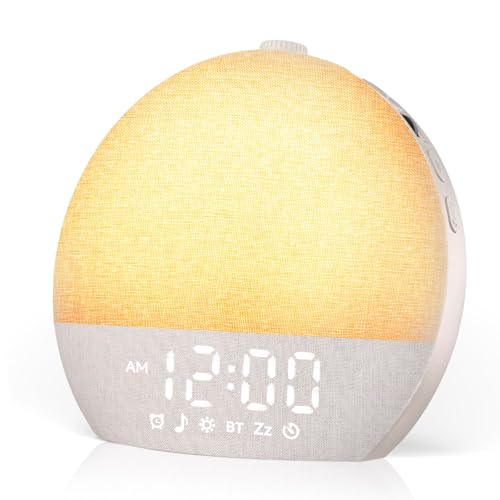 Sunrise Alarm Clock
If waking up at 5 a.m. feels harsh, a sunrise alarm clock can make the whole thing feel a lot gentler. It’s a simple way to ease into early mornings without feeling completely jolted awake.
These are just a few ideas off my head, but you can come up with other little tricks like these that make you look forward to your morning instead of dreading it.
Why Most Morning Routines Don’t Last
I’m pretty sure this is not the first time you’re hearing about a morning routine. nor is it the first time you’re attempting to start one.
And I’m guessing you gave up after about a week or so. I understand. And so have I.
It’s very easy to throw in the towel for one main reason.
Most morning routines are just too ambitious.
It’s very difficult to go from waking up at 7:30 and rushing through everything that needs doing, to trying to wake up at 5:00, work out, journal, meditate, read, make breakfast, get everyone ready—all at once. That’s a huge lifestyle change to expect yourself to make overnight, and it’s no wonder so many people end up giving up within the first week.
It’s just too much, too quickly.
Which is exactly why this routine is different. Instead of trying to overhaul your entire life overnight, you’ll build a simple routine that feels realistic enough to stick with and you’re doing it without forcing yourself to wake up super early.
Over time, those small improvements stack on top of each other until your mornings feel completely different.
When it comes to building a morning routine for productivity, the less complicated it is, the better your chance of making it work
This one strips away all the complicated, extras and helps you stick to the main things so you can get out of bed, move your body for some energy boost, eat something to fuel you, and get your most important thing done everyday.
None of these steps are revolutionary on their own, but together, they are powerful.
They replace rushed mornings with calm ones. They replace decision fatigue with structure. And they help you start each day feeling like you’re in control instead of trying to catch up.
Also, don’t feel like you need to change everything tomorrow because a productive morning routine isn’t built in a single day.
It’s built one morning at a time.